If we’re lucky, this is behavior we haven’t seen since high school.
The coolest individuals can’t stand to see others gaining social status,
so they cut down any peers who are starting to elevate themselves.
Ravens have to live with this behavior all the time. When the top-dog
birds see others building new relationships, they attack these birds or
put themselves in the middle. They may as well be spreading rumors or
defacing each other’s lockers.
Wild ravens living in Austria were the ones to reveal this behavior
to scientists. The ravens, a group of about 300 birds in the Austrian
Alps, have discovered that a local zoo is a convenient source of food.
So the wild birds hang around the captive animals year-round (they
especially like the wild boar enclosure) and steal their provisions.
Because of this, they’re used to seeing humans nearby.
Lees meer: Discover
woensdag 26 november 2014
Powerful Ravens Sabotage Others’ Relationships

Bad news for kids: Parents do not defend their offspring at all cost, bird study shows
Do parents defend their offspring whenever necessary, and do
self-sacrificing parents really exist?
To answer this question,
researchers of the University of Veterinary Medicine, Vienna examined
defence behaviours of parent blue tits. They investigated whether birds
would risk everything to protect their young from predators.
Their
conclusion: parents weigh the risks. It is not only the risk to the
nestlings, but also their own risk that plays a role when defending
their nests. The results were published in the journal Proceedings of the Royal Society B.
Lees meer: ScienceDaily
donderdag 20 november 2014
Parental defense of offspring and life history of a long-lived raptor
Auteurs: Anders Pape Møller, Jan Tøttrup Nielsen
Bron:
Behavioral Ecology
(2014)
25
(6):
1505-1512.
doi:
10.1093/beheco/aru130
Abstract: Animals with parental care defend their offspring with an intensity
reflecting parental investment. Parental investment theory
predicts that parents should take risks relative to
their residual reproductive value. Therefore, parental defense should
change consistently with age reaching a peak at
middle age, and it should vary consistently with age at start and end of
reproduction.
We recorded the intensity of parental defense of
offspring in 410 female goshawks Accipiter gentilis throughout
their lives, ranging from timid females that barely approached a human
intruder at the nest to aggressive females
that physically attacked the human. Females were
consistent in their level of defense throughout life, and aggressive
females
were mated to aggressive males. Investment in
reproduction as reflected by laying date, clutch size, and brood size
showed
a bell-shaped relationship with age.
Females that
started to breed at a young age were less aggressive than females that
started
late. Likewise, females that finished reproduction
at a young age behaved less aggressively than females that finished at
an old age. The intensity of defense of offspring
peaked at an intermediate age followed by a decrease into old age and
senescence.
Females that started to breed early during the
season were more aggressive than late breeders. These findings are
consistent
with the hypothesis that the intensity of parental
defense of their offspring reflects parental investment and patterns of
aging.
dinsdag 30 september 2014
Natural selection causes early migration, shorter parental care for shorebirds
ll bird migrations are fraught with danger -- from the risk of not
finding enough food, to facing stormy weather, and most importantly --
trying not to be eaten along the way. Raptors such as peregrine falcons
are the main predators of migratory birds, and huge flocks of
congregating shorebirds can be easy pickings. In a paper, just published
in Animal Migration, an open access journal by De Gruyter
Open, Dr. Sarah Jamieson and her colleagues provide new evidence that
shorebird species can adopt substantially different ways of dealing with
this predation pressure.
Lees meer: ScienceDaily
woensdag 30 juli 2014
When Mom and Dad Have Different Migratory Routes, Kids Fly Right Down the Middle
It sounds like the setup to a bad joke told by zoologists: What do you get when you cross a bird that always flies to the west with one that always flies east? But the punch line is weirder than you’d guess. Birds’ migratory routes are partly coded into their DNA. A baby that inherits genes for two different routes doesn’t commit to either path. Instead it bounces between them and may take a wild zigzag straight through the middle—even if that route is perilous.
Laboratory tests in the past have hinted that this might be true. One study of captive warblers, for example, crossed a type that orients itself to the southwest when it’s ready to migrate with a type that orients southeast. The offspring pointed themselves directly south.
Lees meer: Discover Magazine
dinsdag 22 juli 2014
Insights into birds' migration routes
By
tracking hybrids between songbird species, investigators have found
that migration routes are under genetic control and could be preventing
interbreeding. The research, which is published in Ecology Letters,
was conducted using geolocators that, like GPS, record the position of a
bird and allow its long distance movement to be tracked.
Compared with their parents, hybrids exhibited increased variability
in their migratory routes: some used intermediate routes across less
suitable areas, while others used the same routes as one parental group
on fall migration and the other on spring migration.
Lees meer: ScienceDaily
Revealed: The mystery behind starling flocks
The mystery
behind the movements of flocking starlings could be explained by the
areas of light and dark created as they fly, new research suggests.
The research, conducted by the University of Warwick and published in the journal PNAS,
found that flocking starlings aim to maintain an optimum density at
which they can gather data on their surroundings.
This occurs when they
can see light through the flock at many angles, a state known as
marginal opacity. The subsequent pattern of light and dark, formed as
the birds attempt to achieve the necessary density, is what provides
vital information to individual birds within the flock.
Lees meer: ScienceDaily
vrijdag 18 juli 2014
Birdsongs automatically decoded by computer scientists
Scientists from Queen Mary University of London have found a
successful way of identifying bird sounds from large audio collections,
which could be useful for expert and amateur bird-watchers alike.
The analysis used recordings of individual birds and of dawn choruses
to identify characteristics of bird sounds. It took advantage of large
datasets of sound recordings provided by the British Library Sound
Archive, and online sources such as the Dutch archive called Xeno Canto.
Lees meer: BiologyNews
dinsdag 15 juli 2014
The Bird That Paints Its Eggs With Bacteria
It’s spring. A female hoopoe—a
bird that looks like a pickaxe painted in a tiger’s colours—lays her
eggs in a hole within a tree. The eggs come out milky blue, but they
soon change colour to a mucky brown. That’s not just because the nests
are dirty, as Wikipedia currently claims. It’s also because of a liquid
that the female produces.
Lees meer: Not exactly rocket science
dinsdag 8 april 2014
Large Broods Drive Bird Parents to an Early Grave
If your parents ever groaned that you and your siblings were aging
them rapidly with your bickering or loud music, they may have been
right—especially if they were jackdaws. Scientists who artificially
increased or decreased the size of these birds’ broods found that
extra-large families make parents die sooner.
One theory of aging says that it comes from accumulated damage to a
body’s cells, and that animals have a limited amount of resources to
spend fixing that damage. Using more resources on something like having
and raising offspring may leave an animal with a smaller reserve for
keeping its cells in good shape. This means reproducing might make it
age sooner.
Lees meer: Discover Magazine
vrijdag 28 maart 2014
Male Eurasian jays know that their female partners’ desires can differ from their own
Knowing what another person wants is not a trivial issue, particularly
when the other's desires are different from our own. The ability to
disengage from our own desire to cater to someone else's wishes is
thought to be a unique feature of human cognition. New research
challenges this assumption.
Despite wanting something different to eat,
male Eurasian jays can disengage from their own current desire in order
to feed the female what she wants even when her desires are different to
his.
Lees meer: ScienceDaily
woensdag 26 maart 2014
Foraging site choice and diet selection of Meadow Pipits Anthus pratensis breeding on grazed salt marshes
Auteurs: van Klink Roel, Mandema Freek S., Bakker Jan P., Tinbergen Joost M.
Bron: Bird Study; Mar 2014, Vol. 61 Issue 1, p101-110, 10p
Abstract:
Methods We measured food availability in relation to vegetation structure, habitat use and nestling diet for six individual nests. Nestling diet was determined by microscopic analysis of faeces while food availability over different vegetation heights was estimated by suction sampling. Information on habitat use was gathered by direct observation. Foraging locations were compared to random locations at the same distance from the nest.
Results Nestling diet mainly consisted of larger spiders (> 5 mm) (38% of prey individuals), caterpillars (c. 2 cm) (38%), other insect larvae (12%) and flies and wasps (7%). There was a positive relationship between vegetation height and prey availability. Contrary to predictions, vegetation at Pipit foraging locations was less heterogeneous than at random locations, yet we found no evidence for a preference for short or tall vegetation. We found strong evidence for selective foraging for larger prey, since the relative abundance of especially large spiders and caterpillars was much higher in the faecal samples than in the field. This diet differed considerably from Meadow Pipit diet reported from other habitats.
vrijdag 14 maart 2014
Post-Breeding Migration of Dutch-Breeding Black-Tailed Godwits: Timing, Routes, Use of Stopovers, and Nonbreeding Destinations
Author(s): Hooijmeijer, Jos C. E. W.; Senner, Nathan R.; Tibbitts, T. Lee; et al.
Source: ARDEA, 101 (2): 141-152 FAL 2013
Abstract: Conservation of long-distance migratory shorebirds is complex because these species use habitats spread across continents and hemispheres, making identification of critical habitats and potential bottlenecks in the annual cycle especially difficult.
The population of Black-tailed Godwits that breeds in Western Europe, Limosa limosa limosa, has declined precipitously over the past few decades. Despite significant efforts to identify the root causes of this decline, much remains unclear. To better understand the migratory timing, use of stopover and nonbreeding sites, and the potential impact of breeding success on these parameters, we attached 15 Argos satellite transmitters and 10 geolocation tracking devices to adult godwits nearing completion of incubation at breeding sites in southwest Friesland, The Netherlands during the spring of 2009.
We successfully tracked 16 adult godwits for their entire southward migration and two others for part of it.
Three migration patterns and four regions of use were apparent. Most godwits left their breeding sites and proceeded south directly to stopover sites in the Mediterranean — e.g. Spain, Portugal, and Morocco — before flying on to non-breeding sites in West Africa. Other individuals spent the entire nonbreeding season in the Mediterranean. A third pattern included a few individuals that flew nonstop from their Dutch breeding sites to nonbreeding sites in West Africa. Tracking data from this study will be immediately useful for conservation efforts focused on preserving the dispersed network of sites used by godwits during their southward migration.
vrijdag 7 maart 2014
Birdsong is not all about sexual selection: Female birds sing much more often than previously thought
In 71% of all songbird species with available data, the female sings too. This is remarkable because in the wake of Darwin's theory of evolution, birdsong has generally been seen as a characteristic of male birds, allowing them to compete with other males and attract females.
Leiden biologist Katharina Riebel published this finding on 4 March in Nature Communications, together with an international team.
Message to Darwin: Birdsong is not all about sexual selection
The team studied the available literature on the song of female songbirds. This resulted in the first worldwide survey and the first study of song in females of primitive songbird species.
The team used a genetic databank to map the characteristics and evolution of these female songbirds. Their analysis shows that in the common ancestors of modern songbirds of both males and females must have had song. Leiden biologist Riebel says that 'the origin of birdsong must therefore lie not only in sexual selection and competition among males, as suggested by Darwin. It seems more probable that sexual and social selection also played a role in females: song allowed both males and females to compete for the resources necessary for survival and reproduction.'
Lees meer: ScienceDaily
maandag 3 maart 2014
Lemmings fuel biggest snowy-owl migration in 50 years
For the lowly Arctic lemming, life is cruel. In a flash before death, often the last things a lemming sees are the deadly talons of a majestic snowy owl.
A mass sacrifice of this rodent with stubby legs probably gave rise to
what scientists are calling the largest snowy-owl irruption in at least
half a century. The gleaming white birds
poured out of Canada this winter to points throughout the eastern US,
captivating birdwatchers, scientists and people who had never seen them
up close.
Their flights, covering thousands of kilometres, were
fuelled by a steady diet of lemmings. The lemming population spikes
about every four years in the Arctic, and last summer it rose off the
charts on Canada's Bylot Island in the Nunavut territory.
Lees meer: theGuardian
maandag 10 februari 2014
Jackdaws protect their nests 'with bright eyes'
They found that jackdaws avoided nest boxes when they could see the eyes of a jackdaw inside.
Experts suggest this is the first evidence that bright eyes could act as signals in the bird world.
The results were published in the Royal Society journal Biology Letters.
Lees meer: BBC Nature
vrijdag 17 januari 2014
Birds That Fly in a V Formation Use An Amazing Trick
Why do some birds fly in a V?
Most people would say that they do it to save energy, which would be
right. But it turns out that birds in a V are actually pulling of a feat
that’s more complicated and more impressive than anyone had imagined.
Here is the standard explanation for the V-formation:
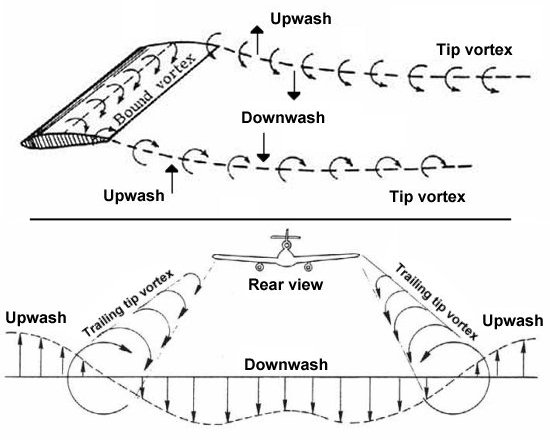
As a bird flaps, a rotating vortex of air rolls off each of its
wingtips. These vortices mean that the air immediately behind the bird
gets constantly pushed downwards (downwash), and the air behind it and
off to the sides gets pushed upwards (upwash). (See this image if that’s not clear.)
If another bird flies in either of these upwash zones, it gets free
lift. It can save energy by mooching off the air flow created by its
flock-mate.
This all makes sense, but it represents decades of largely
theoretical work. Scientists calculated how air should flow around a
flying bird based on what we know about planes, but almost no one had
taken any actual measurements. Henri Weimerskirch changed that in 2001,
when he fitted pelicans with heart-rate monitors. He found that birds at the back of the V had slower heart rates than those in the front, and flapped less often.
It was an interesting study, which confirmed that birds benefit from flying in a V. But it didn’t address why or how they do so. That’s what Steven Portugal wanted to know.
Lees meer: Not exactly rocket science
vrijdag 10 januari 2014
Radio tag reveals epic phalarope journey
A tiny geolocator has uncovered a hitherto unsuspected extra-long migration by a Scottish Red-necked Phalarope.
An RSPB tracking device weighing less than a paperclip has helped
scientists uncover one of the world’s great bird migrations. It revealed
that one particular Scottish Red-necked Phalarope migrated thousands of
miles west across the Atlantic to the Pacific Ocean, a longer journey
than that recorded for any other European breeding bird.
Lees meer: Birdwatch
woensdag 8 januari 2014
Why Timing of Bird Migration Is Changing
Researchers at the University of East Anglia have found out why birds are migrating earlier and earlier each year.
Experts have long suspected climate change is somehow driving this advancing migration pattern. But new research published today reveals that individual birds migrate like clockwork -- arriving at the same time each year.
However, climate warming is resulting in earlier nesting and hatching
earlier each year, and this appears to be linked to the advancing
migration.
Lees meer: ScienceDaily
Magpie Parents Know a Baby Cuckoo When They See One
Cuckoos that lay their eggs in the nest of a magpie so that their chicks
can be raised by the latter better hope that their young are not raised
together with other magpies.
The chances of cuckoo fledglings raised in mixed broods being fed by
their foster parents are much lower, according to research led by Manuel
Soler of the Universidad de Granada in Spain. The findings are published in Springer's journal Behavioral Ecology and Sociobiology.
Lees meer: ScienceDaily